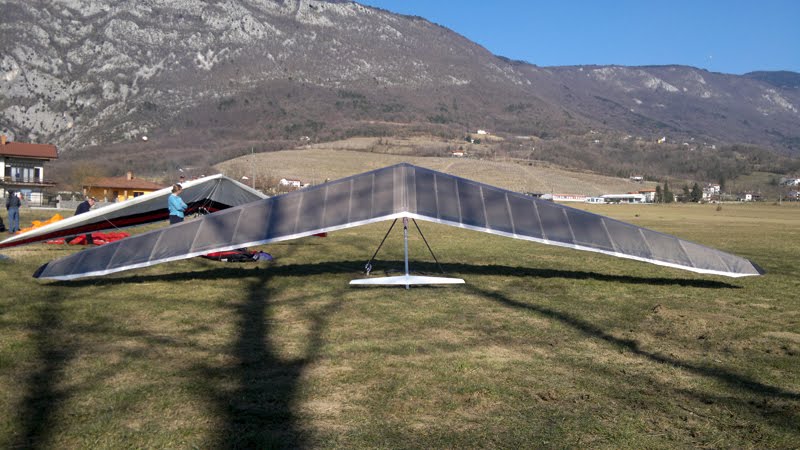
Aeros claims they are getting 16.7:1 glide out of these things. Is that what their horizontal stabilizer is doing? There is a big drag penalty of having the pitch stability mechanism built into the airfoil.
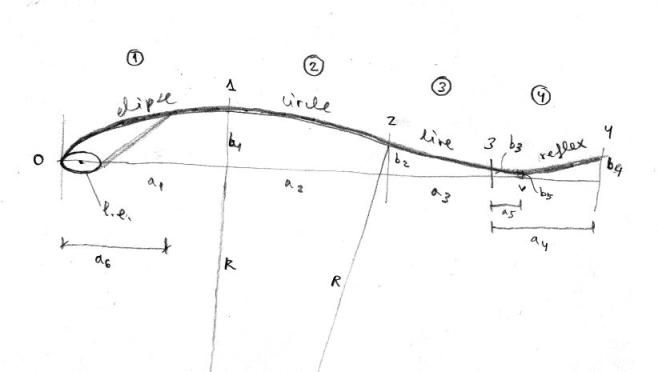
Image taken from Joe Faust's link
Further add a vertical surface to allow longer aspect ratio and decrease sweep needed for adverse yaw reduction.
He won an east coast comp recently. I have his email address if you are interested. He would be able to answer your questions and I'm sure he has data to go along with it.
I've read all about it... Or so I think. Please contradict me.
Inherent HG defects that are used for ease of construction, price, and ignorance.
1. Use of reflex in the airfoil profile. It does give pitch stability at the cost of crazy drag. I think reflex like this should only be used in falcon, condor like gliders. Sounds like Aeros has this problem figured out. Use low sprogs for washout structure, and horizontal stabilizers for pitch stability is the way to go.
2. Use of yaw-roll coupling to turn. Crazy inherent drag producer at minimum control gain. The reason why high performance gliders are slow on roll, why VGs don't work as well as they should, and why rigid wings work as well as they do.
I think I can get a flex wing without expensive carbon D-tubes to glide closer to a rigid. 1. Remove the reflex in the sail airfoil profile, add a horizontal stabilizer is its place. 2. Place weight shift sensitive sail cuts to affect portions of the span sensitive to roll shift. Modern sailcut software indicates weave alignment and pattern to achieve this. Massive unnecessary sail twist shortens effective span length. It's a bummer when slightly more popular sports like sailing and windsurfing are flexing crazy technology on us.