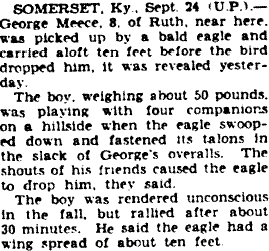
I was just wondering if all hang gliders should be fitted with carbon fiber crossbars for safety reasons.
http://abclocal.go.com/kgo/story?sectio ... id=6735612
http://www.icaro2000.com/Products/Hangg ... 9/Z9.htm#4
Moyes has a 100% carbon fiber option
http://www.moyesusa.com/products/litespeedRS.html
Are carbon fiber cross bars safer
Moderator: Chip
Re: Are carbon fiber cross bars safer
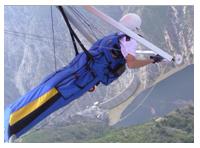
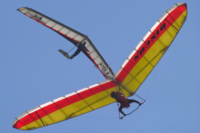
Slightly OT but I don't understand why someone flying a topless HG is news.dhmartens wrote: http://abclocal.go.com/kgo/story?sectio ... id=6735612

Op,
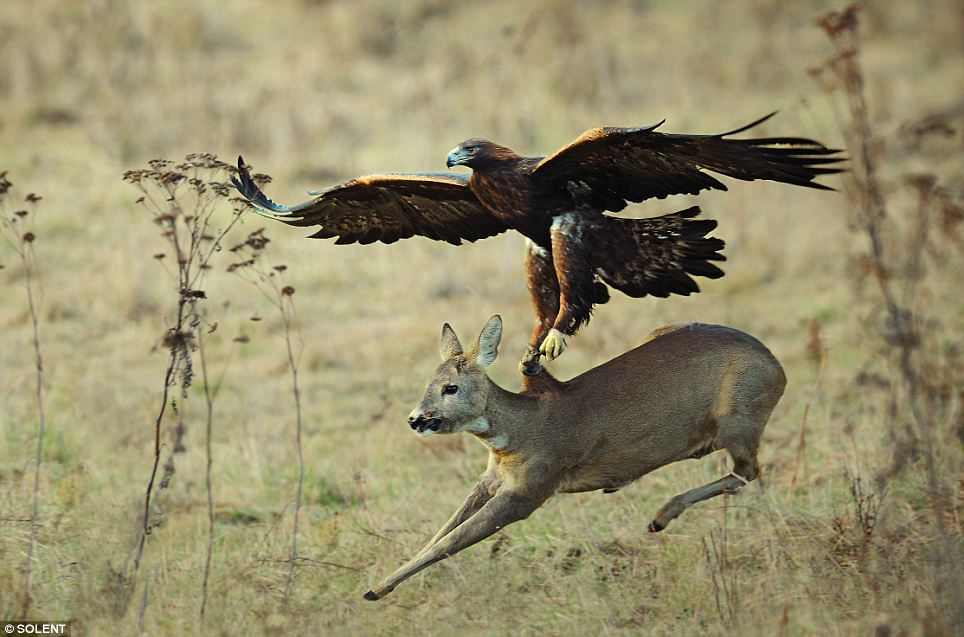
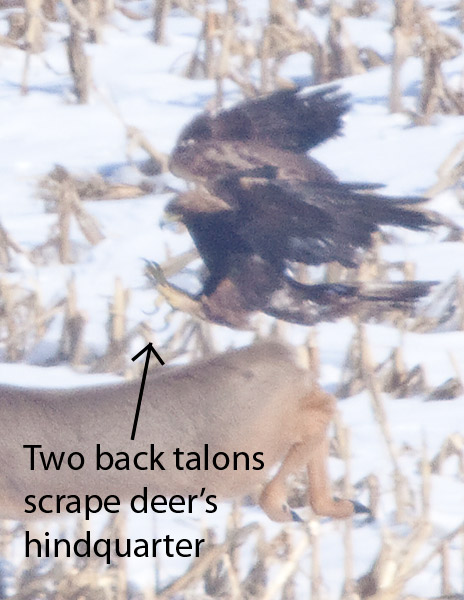
If we could just train that eagle to drop off those deer at the new pavilion barbecue.
That was the only media story I've seen highlighting the technology of modern hang gliders, unless maybe a discovery channel show.
It seems it might be possible to eliminate all rigging if the control frame could be securely attached somehow at the keel/crossbar, almost like an Atos. There was some discussion of banning racing wires, but why not ban aluminum crossbars instead. I don't know the statistics of tacoing except that it didn't happen in Sylmar.
I know the carbon fiber is expensive but so was a color computer monitor. In 1993 an 8" color screen notebook was $3200, today a 42" color led 1080p tv can be had for $349. Once a factory starts spiting out carbon fiber tubes at 15 mph on an assembly line, things will change.
If we could just train that eagle to drop off those deer at the new pavilion barbecue.
That was the only media story I've seen highlighting the technology of modern hang gliders, unless maybe a discovery channel show.
It seems it might be possible to eliminate all rigging if the control frame could be securely attached somehow at the keel/crossbar, almost like an Atos. There was some discussion of banning racing wires, but why not ban aluminum crossbars instead. I don't know the statistics of tacoing except that it didn't happen in Sylmar.
I know the carbon fiber is expensive but so was a color computer monitor. In 1993 an 8" color screen notebook was $3200, today a 42" color led 1080p tv can be had for $349. Once a factory starts spiting out carbon fiber tubes at 15 mph on an assembly line, things will change.

Looks like they're having a pleasant dance. A frolic in the paddock, if you will...
More important, what is the airspeed velocity of such a laden eagle?
[youtube]http://www.youtube.com/watch?v=y2R3FvS4xr4[/youtube]
More important, what is the airspeed velocity of such a laden eagle?
[youtube]http://www.youtube.com/watch?v=y2R3FvS4xr4[/youtube]
That golden eagle has an attitude problem and an altitude problem.
1. Hubris. Everyone knows one-handed catches are for showboats.
2. Greed. Obviously a one-percenter going for more than he can possibly use or enjoy.
3. Physics. It's doubtful that his wing area can produce enough lift to get that venison back to the kitchen. Even if he has the pectoral strength of Lou Ferrigno, either the wing loading will increase his airspeed to the point where it rips his eyes out, and/or the increasing dihedral of his distal primaries (remiges) will oppose his roll input to the point where he will not be able to turn and will fly straight into grille of a three cubic-yard cement batch-mix truck, like Wily Coyote, which would serve him right. (See No. 2)
No disrespect to Monty Python, but isn't "airspeed velocity" redundant?
1. Hubris. Everyone knows one-handed catches are for showboats.
2. Greed. Obviously a one-percenter going for more than he can possibly use or enjoy.
3. Physics. It's doubtful that his wing area can produce enough lift to get that venison back to the kitchen. Even if he has the pectoral strength of Lou Ferrigno, either the wing loading will increase his airspeed to the point where it rips his eyes out, and/or the increasing dihedral of his distal primaries (remiges) will oppose his roll input to the point where he will not be able to turn and will fly straight into grille of a three cubic-yard cement batch-mix truck, like Wily Coyote, which would serve him right. (See No. 2)
No disrespect to Monty Python, but isn't "airspeed velocity" redundant?
Soar With Prudent Passion
Larry Chamblee
Larry Chamblee
-
skygeek AKA Seabass

- Posts: 252
- Joined: Thu Dec 21, 2006 9:34 pm
- Location: Newhall
- Contact:
-
Steve90266

- Posts: 488
- Joined: Fri Nov 30, 2007 6:05 pm
- Location: Manhattan Beach
- Contact:
Deer in the headlights
You guys have got it ALL WRONG. That deer is clearly sick, and the eagle is trying to help it to the hospital.
Or maybe that eagle is an ethereal spirit guide of that deer. Did you ever consider that?! Always there, helping the little deer through life, avoiding obstacles, hunters, hungry mountain lions and the like. Warms my heart just thinking about it.
Or maybe that eagle is an ethereal spirit guide of that deer. Did you ever consider that?! Always there, helping the little deer through life, avoiding obstacles, hunters, hungry mountain lions and the like. Warms my heart just thinking about it.
Steve Murillo




If you haven't seen the Honey Badger, you'll me amazed what happens at the end of the clip.
http://www.youtube.com/watch?v=4r7wHMg5Yjg
http://www.youtube.com/watch?v=4r7wHMg5Yjg


-
Steve90266
- Posts: 488
- Joined: Fri Nov 30, 2007 6:05 pm
- Location: Manhattan Beach
- Contact:
Big Bird
From Wikipedia..
"Argentavis magnificens (literally "magnificent Argentine bird") is the largest flying bird ever discovered. This bird, sometimes called the Giant Teratorn, is an extinct species known from three sites from the late Miocene (6 million years before present) of central and northwestern Argentina, where a good sample of fossils has been obtained.[1]
The humerus (upper arm bone) of Argentavis is somewhat damaged. Even so, it allows a fairly accurate estimate of its length in life, which was only slightly shorter than an entire human arm.[2] The species apparently had stout, strong legs and large feet which enabled it to walk with ease. The bill was large, rather slender, and had a hooked tip with a wide gape.
Contents [hide]
1 Physical characteristics
2 Ecology
3 Footnotes
4 References
5 External links
[edit]Physical characteristics
Currently accepted estimates:[citation needed]
Wingspan: 7 m (23 ft)[3]
Wing area: nearly 7 m² (75 square ft)
Wing loading: c. 11.5 kg/m²
Length: 3.5 m (11.5 ft)
Height: 1.7–2 m (5.6–6.6 ft)
Mass: 70-78 kg (150-172 lb)[3][4]"
"Argentavis magnificens (literally "magnificent Argentine bird") is the largest flying bird ever discovered. This bird, sometimes called the Giant Teratorn, is an extinct species known from three sites from the late Miocene (6 million years before present) of central and northwestern Argentina, where a good sample of fossils has been obtained.[1]
The humerus (upper arm bone) of Argentavis is somewhat damaged. Even so, it allows a fairly accurate estimate of its length in life, which was only slightly shorter than an entire human arm.[2] The species apparently had stout, strong legs and large feet which enabled it to walk with ease. The bill was large, rather slender, and had a hooked tip with a wide gape.
Contents [hide]
1 Physical characteristics
2 Ecology
3 Footnotes
4 References
5 External links
[edit]Physical characteristics
Currently accepted estimates:[citation needed]
Wingspan: 7 m (23 ft)[3]
Wing area: nearly 7 m² (75 square ft)
Wing loading: c. 11.5 kg/m²
Length: 3.5 m (11.5 ft)
Height: 1.7–2 m (5.6–6.6 ft)
Mass: 70-78 kg (150-172 lb)[3][4]"
Steve Murillo
-
Steve90266
- Posts: 488
- Joined: Fri Nov 30, 2007 6:05 pm
- Location: Manhattan Beach
- Contact:
Big Bird
From Sesame Street...
"Big Bird is an 8-foot, 2-inch yellow bird who lives on Sesame Street. Since Sesame Street premiered in 1969, Big Bird has entertained millions of pre-school children and their parents with his wide-eyed wondering at the world. Big Bird is also a bird who makes friends easily.
The world-famous bird has been a central character on Sesame Street for the program's run, premiering in the first episode. The big yellow bird can roller skate, ice skate, dance, sing, write poetry, draw, and even ride a unicycle — pretty talented for a character described in the TV show's writer's guide as a 6-year-old. But despite this wide array of talents, he's prone to frequent misunderstandings, like thinking that the alphabet is one long word."
"Big Bird is an 8-foot, 2-inch yellow bird who lives on Sesame Street. Since Sesame Street premiered in 1969, Big Bird has entertained millions of pre-school children and their parents with his wide-eyed wondering at the world. Big Bird is also a bird who makes friends easily.
The world-famous bird has been a central character on Sesame Street for the program's run, premiering in the first episode. The big yellow bird can roller skate, ice skate, dance, sing, write poetry, draw, and even ride a unicycle — pretty talented for a character described in the TV show's writer's guide as a 6-year-old. But despite this wide array of talents, he's prone to frequent misunderstandings, like thinking that the alphabet is one long word."
Steve Murillo
-
Steve90266
- Posts: 488
- Joined: Fri Nov 30, 2007 6:05 pm
- Location: Manhattan Beach
- Contact:
Big Bird
Steve Murillo